A Relationship Can Feel Serious Without Being Ready for Marriage. A Simple 21-day Reset That Helps Mature Single Women Stop Repeating Painful Dating Patterns and Recognise a Marriage Ready Man

Sometimes, the most confusing relationship is not the one that is obviously unhealthy.
It is the relationship that contains affection, frequent communication, connection and conversations about the future—but still does not seem to move towards marriage.
The calls may be regular. The conversations may be deep. He may appear genuinely interested in your work, your family, your faith and your dreams.
He may speak warmly about marriage and the kind of home he hopes to build one day. You begin to wonder: “Could this finally be the relationship I have prayed for?”
But as time passes, the relationship becomes more emotionally significant without becoming practically clearer.
Important conversations are postponed.
Plans remain vague. Whenever you ask where the relationship is going, you hear: “Let us not rush this,” or “I still need to sort myself out financially,”or “We've spoken about lobola - its coming” even though months have passed.
You start interpreting every message. You ask yourself why he watched your status but did not reply. You replay conversations while driving home from work. You pray for confirmation, yet deep inside you are afraid of what the truth may require you to do. You do not want to become suspicious. You do not want to rush a good man. You do not want desperation to push you into a wrong decision.
But you also do not want to mistake a relationship that is continuing for one that is genuinely progressing.
Perhaps you are not dating anyone at the moment.
Maybe you are healing from a previous marriage or relationship, raising children on your own, navigating what a blended family might look like, or trying to understand what healthy progress should look like.
Wherever you are, Lerato’s story may help you recognise something important before attention becomes attachment and hope becomes a long-term emotional investment.
Drop everything you are doing now and listen to every word I’m about to say.
Privacy note: Lerato’s name and some identifying details have been changed to protect her privacy. Her relationship journey and the lessons described are based on her real experience.
Hi, my name is Lerato.
First thing you should know about me is that I’m not a relationship coach. I’m not the woman who always made perfect decisions.
I’m a regular Christian professional woman from Johannesburg who became tired of relationships that looked serious in the beginning but somehow never progressed towards marriage.

The Relationship That Finally Forced Me to Face My Pattern
I had met intelligent men. Church-going men. Ambitious men. Men who spoke respectfully to my family and could discuss purpose, business and faith for hours.
The pattern was subtler than “I keep choosing obviously bad men.”
My relationships often started beautifully. There was attention, chemistry, prayer and long conversations. I felt seen. I felt chosen. I felt hopeful.
But after the early excitement, the relationship would settle into a strange middle ground.
We were too emotionally involved to call it casual, but too undefined to call it purposeful.
There was always a reason we could not yet discuss marriage seriously. Career pressure. Family expectations. The lobola conversation "still being worked out". A previous marriage he was still processing. Children from a previous relationship who needed time to adjust. A need to “get his finances in order first.”
Every reason sounded understandable on its own.
Together, they became years.
Then I Met Thabo
I met a man I will call Thabo.
He was warm, intelligent and involved in church. He spoke about marriage early enough to make me feel safe, but not clearly enough to create accountability.
He would say, “I'm not the type to waste a woman's time. I do want to get married one day, properly, the right way.”
That sentence became the rope I held onto.
He had not actually said: “I am intentionally exploring marriage with you, and here is how we will move towards lobola and a wedding date.”
He had only expressed a general belief in marriage. I quietly converted that broad value statement into a personal commitment.
For the first few months, Thabo called very often. We prayed together. His family knew about me. He asked thoughtful questions about my life and work.
I thought, This is different.
But as the months passed, I noticed a shift.
Whenever I raised the subject of direction, - of lobola, of timelines, of what came next - he became affectionate but vague.
“Baby, you know I care about you. Why do we need to rush something that's good?”
I would leave those conversations feeling guilty for wanting clarity. Guilty, and something else I didnt want to admit - I earned more than he did, and I began quietly wondering whether that was part of why ke kept finding reasons to wait.
So I adjusted.
I stopped asking direct questions. I tried to be “patient.” I told myself that a godly woman should not pressure a man. I confused silence with patience.
At church, people saw us together and assumed things were progressing. Family asked careful questions at gatherings. I smiled and said, “We are taking things slowly.”
Inside, I was anxious.
The emotional cost was not always dramatic. It was a slow erosion.
I checked my phone during meetings. I analysed the warmth of his messages. A delayed response could change my mood. A sweet call could restore my hope for another week.
My confidence began to depend on his consistency.
I was a woman who could run a household, raise children and lead at work, yet I was afraid to ask one simple question:
“What exactly are we building?”
The Family Meeting That Changed Everything
Thabo and I had finally agreed it was time - his family would call mine, and we would begin the lobola conversation properly. It had been on both our minds for months. The date came. The call was meant to happen that Sunday.
That morning, he sent a message saying something had come up on his side and his family needed "a bit more time".
No call. No real explanation. Just a short message and a promise to speak later.
I sat in my lounge that afternoon, the family meeting notes I'd prepared still sitting on the table, unopened envelope beside them, and nobody called.
I didn't call anyone that afternoon. I just sat there in the quiet, watching the light move across the notes I'd prepared for a conversation that was never going to happen that day.
By evening, I couldn't hold the not-knowning anymore. I phoned him myself. I didn't ask about his family, or the delay, or what "a bit more time" meant. I asked the only question that actually mattered to me. “Thabo, do you genuinely see us moving towards marriage - or are we just going to keep having versions of this conversation?”
He didn't answer straight away. When he did his voice had changed.
Then he said, “Lerato, I care about you deeply. But If I'm honest, I don’t think I am ready to make the kind of commitment you're asking for. Not right now.”
Two years of "right now".
I didn't argue with him. I just kept asking, gently, one question at a time - what would need to change, how much time he thought he needed, whether he even wanted me to keep waiting. Each answer came back the same shape: vague, kind-sounding, and empty.
The one that stayed with me the longest was, “I don’t want to lose you, but I also don’t want to be unfair to you.”
It sounded like consideration. It was actually a decision he was asking me to make for both of us.
I didn't cry until after I put the phone down. Quietly. The kind of tears that come when the body finally admits what your mind has been arguing against for months. I sat with that for the rest of the night. And somewhere in it, I realised I didn't just need comfort. I needed someone who would tell me the truth, even if it stung.
So the next morning, I did something I hadn't done in a long time - I drove to see Ma Dineo. an older woman from my church who has quietly watched more relationships than she'd ever admit to counting
I told her everything. She let me finish before she said a word. Then she asked me one question I have never forgotten:
“My child, has he ever asked you what he needs to build - or has he only ever asked you for more time? Attention can make you feel loved, but only intention can tell you where the relationship is going."
I felt exposed.
Because I had measured seriousness by frequency of calls, by how his family treated me, by spiritual language and emotional closeness.
I had not measured it by clarity, consistency, responsibility,sacrifice, alignment and progress.
But knowing that did not immediately solve my problem.
I began searching for answers.
I watched relationship videos online. Some were helpful, but many contradicted one another. One person said, “Never pressure a man about lobola.” Another said, “Give him an ultimatum after a year.” I became more informed and less clear.
Second, I asked friends to interpret his behaviour. Every friend brought her own history. The hopeful ones told me to wait. The wounded ones told me to walk away immediately. I collected opinions but still had no framework.
Third, I tried to pray away my anxiety without confronting the ambiguity. Prayer gave me comfort, but I kept avoiding the practical wisdom the situation required. I was asking God for peace while refusing to ask the relationship for truth.
The Online Programme I Almost Missed
A few weeks later, a friend invited me to a relationship gathering online.
I almost declined.
I was tired of relationship events. I expected another evening of slogans, jokes about single women and oversimplified advice that never seemed to understand South African realities - lobola, blended families, unequal incomes, extended family involvement.
But my friend insisted.
“Come. These people are practical. They do not shame women, and they do not excuse men.”
That was where I first listened to Pastor Toyin Ugoihe and her husband teach together.
They spoke about relationship patterns, not merely bad partners.
They explained that a pattern is the repeated interaction between what you desire, what you overlook, what you fear, what you tolerate, what you assume and how you respond when clarity is required.
That insight sat heavily in my heart.
During the question-and-answer session, I asked:
“How do I know whether I am being patient with a good man or wasting time indefinitely while a lobola conversation and a proposal keep getting postponed?”
Pastor Toyin answered gently.
“Patience is not the absence of questions. Wisdom asks what is being built, what is changing, who is taking responsibility and whether the relationship is producing increasing clarity - not just increasing time.”
Dr Chucks added:
“Do not only ask whether a man likes you. Ask whether he has the character, capacity, conviction and courage to build towards marriage - practically, not just emotionally. Affection matters, but affection alone cannot carry a marriage.”
They introduced a simple three-part process:
Diagnose. Understand yourself, your recurring patterns, your fears, your attractions and the stories you keep repeating.
Apply. Evaluate the relationship in front of you using clear indicators of character, intention and marriage intention and marriage readiness.
Maintain. Date with boundaries, conversations, progress markers and decisions that protect both people from drifting.
I expected a mysterious spiritual key. Instead, I heard a practical process that required honesty.
It did not give me a way to control a man’s decision, or force his family to move faster. It gave me something better:
A way to make my own decisions wisely.
What Happened When I Applied What I Learned
I went home and began writing.
I examined the relationships I had previously been in or seriously considered.
I looked for similarities—not only in them, but also in me. I discovered that I was strongly drawn to potential.
I could see who a man might become and begin relating to that future version instead of the man standing in front of me.
I often interpreted family involvement and warm words as marriage readiness.
A man's family could know about me, ask after me, treat me well - and I would assume that meant commitment was already being built.
I also delayed difficult conversations because I feared that truth would end the relationship - and because, as a mother, I feared what another ending might cost my children.
I had called: • anxiety - discernment; • passivity - patience; • emotional attachment - confirmation; • indefinite waiting - faith. Then I wrote:
“Clarity cannot destroy the relationship that truth is meant to build. It can only expose the relationship that ambiguity was keeping alive.”
For the first time, I understood that asking an honest question was not an act of desperation.
It was an act of stewardship - for me.
I contacted Thabo and requested one final conversation.
I did not accuse him. I did not threaten him. I did not try to convince him to choose me.
I said:
“I value what we have shared. I am intentionally building towards marriage, and I need a relationship that is moving through clear conversations, mutual evaluation and visible progress - including with our families. Are you willing and ready to build that with me now? If not, I respect your honesty, but I will not continue in a relationship with no defined next step.”
He became quiet.
Then he said, “You sound different.”
I asked what he meant.
“You are calm. You are not trying to convince me.”
He was right.
I no longer needed to convince him. I needed to hear him.
He admitted that he was not ready to take responsibility for a marriage-focused relationship. He cared about me, but he wanted the emotional benefits of closeness without the weight of a clear decision.
The truth hurt.
But it was not the continuing pain of confusion, guessing and waiting.
I ended the relationship respectfully.
A few weeks later, my friend Palesa looked at me and said:
We met for coffee in Sandton, and she stared at me across the table.
“Lerato, you look lighter. What happened?”
I smiled.
“I stopped trying to make uncertainty feel like love.”
That was the beginning of my reset.
Not because I immediately met my future husband.
But because I became a woman who could date without abandoning herself, spiritualising ambiguity or negotiating against her own future.
The Questions My Friends Began Asking
When I shared what I had learned with some of my friends, they began asking:
“How do I identify my own pattern?”
“How do I distinguish attention from intention?”
“What exactly should I ask a man - and his family?”
“How can I tell whether he is serious, slow, afraid or simply comfortable?”
“How do I set standards without becoming rigid?”
“How do I know whether to build, pause or leave?”
These were not questions from one woman alone.
Pastor Toyin had heard them repeatedly through years of relationship teaching, mentoring and programmes for Christian women.
She decided to organise the biblical principles, practical exercises, assessments, conversation guides and decision-making tools into one focused resource.
“The wisdom from above is first pure, then peaceable, gentle, open to reason, full of mercy and good fruits…” — James 3:17
Introducing…
A 21-Day Blueprint to Break Unhealthy Patterns, Find Clarity Before Commitment and Recognise a Marriage-Ready Man
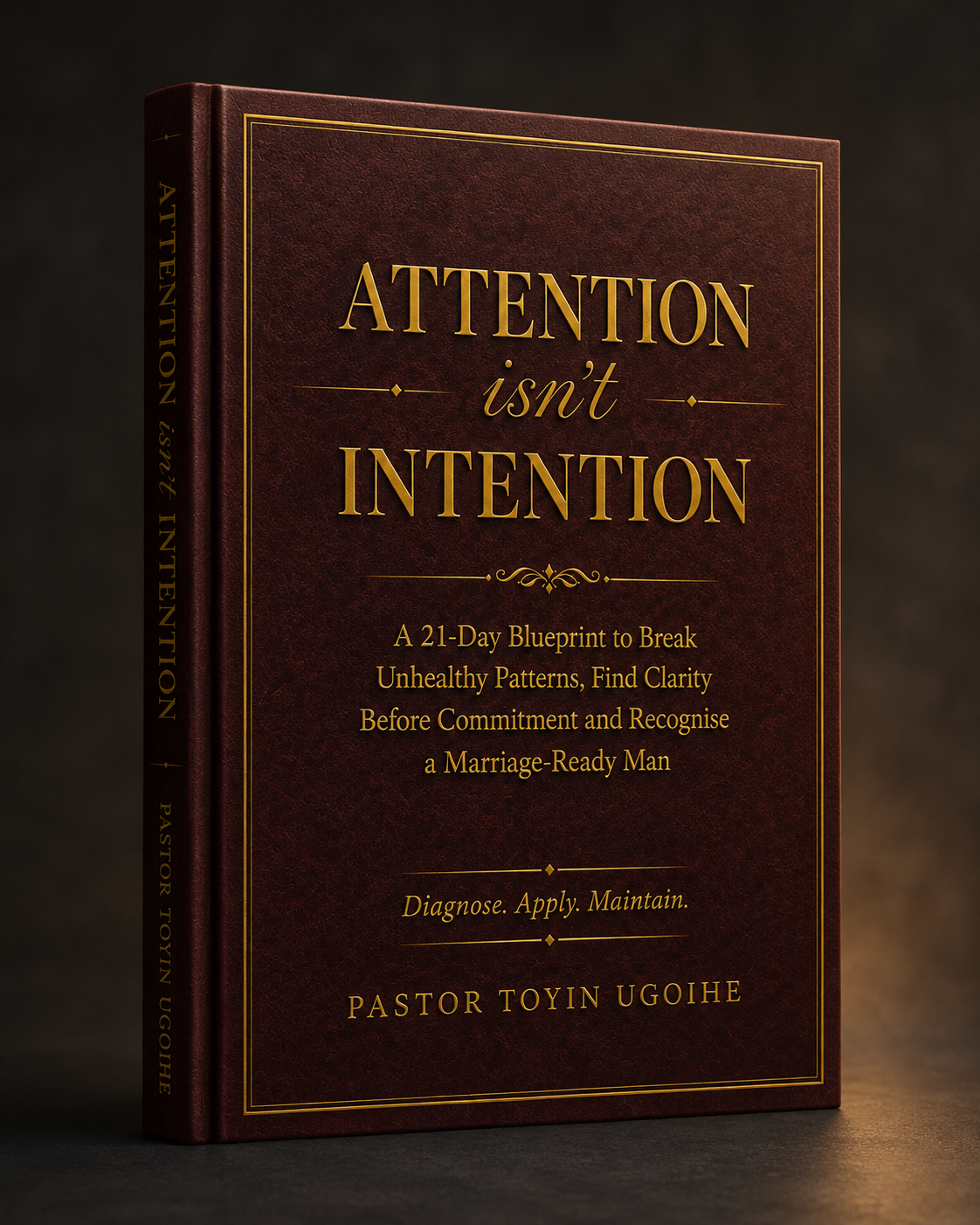
Attention Isn't Intention is a practical digital guide designed to help mature Christian women move from confusion and guesswork towards clarity, discernment and responsible relationship decisions. It does not teach you to manipulate a man, become suspicious of everyone or force a relationship towards marriage. It helps you understand yourself, evaluate what is actually happening and decide wisely - including how to navigate the practical, cultural and family conversations.
Inside This Practical E-Guide, You’ll Discover:
Over twenty-one guided days, you will work through three phases:
Phase One: Diagnose
Understand your relationship history, recurring patterns, emotional triggers, attraction patterns, standards and the pressure influencing your decisions.
Phase Two: Apply
Evaluate attention, intention, character, compatibility, mutuality, marriage readiness and visible relationship progress - Including family and lobola conversations.
Phase Three: Maintain
Develop boundaries, essential conversations, progress markers and a practical relationship strategy for moving forward.
You will also receive practical assessment, reflection and decision-making tools throughout the twenty-one-day process, including:
- Baseline Relationship Assessment
- Relationship Pattern Snapshot — Day 1
- Relationship Standards Clarifier — Day 6
- Attention-to-Intention Evidence Check — Day 8
- Marriage-Readiness Assessment — Day 9
- Relationship Indicator Map: Green, Amber and Red — Day 11
- Ten Essential Conversations — Day 13
- Build, Pause or Leave Decision Sheet — Day 14
- Final Relationship Strategy — Day 21
These tools help you move beyond general relationship advice and begin examining your own experiences, standards, relationships and decisions in a practical and structured way.
This guide is helpful whether you are:
- currently single;
- preparing for your first serious relationship;
- healing from a previous marriage or relationship;
- newly dating;
- in a relationship that feels serious but remains unclear;
- navigating a potential blended family;
- over 35 and feeling increasing pressure;
- trying to determine whether your standards are wise or fear-driven;
- committed to dating towards marriage without desperation or compromise.
Why You Can Trust the Guidance in This Book
Pastor Toyin Ugoihe has spent years listening to, teaching and mentoring Christian women through relationship programmes and personal conversations across South Africa and Nigeria.
The questions behind this book came from women who were not foolish, careless or unserious.
They were believers, professionals, mothers, leaders and responsible women who wanted practical biblical guidance for understanding themselves and making wiser relationship decisions.
Attention Isn't Intention brings together:
- biblical relationship principles;
- years of relationship teaching and mentoring insight;
- culturally relevant relationship realities;
- structured personal reflection;
- practical assessments, scripts and decision-making tools.
It will not promise that you will be married in twenty-one days.
It cannot guarantee a proposal, a lobola conversation moving forward, or another person’s commitment.
It gives you a structured process for recognising patterns, asking clearer questions and making wiser decisions with dignity.
What You Receive Today
Attention Isn't Intention: Compact 21-Day Edition
You receive:
- the compact digital guide;
- twenty-one guided days of biblical teaching and application;
- daily reflection exercises;
- practical assessments and checklists,conversation guides;
- your Final Relationship Strategy.
Regular Value:
Get Immediate Access Today for
Wait, Your Journey Can Go Even Deeper
When you purchase Attention Isn't Intention, you can also receive these practical companion resources at no extra cost.
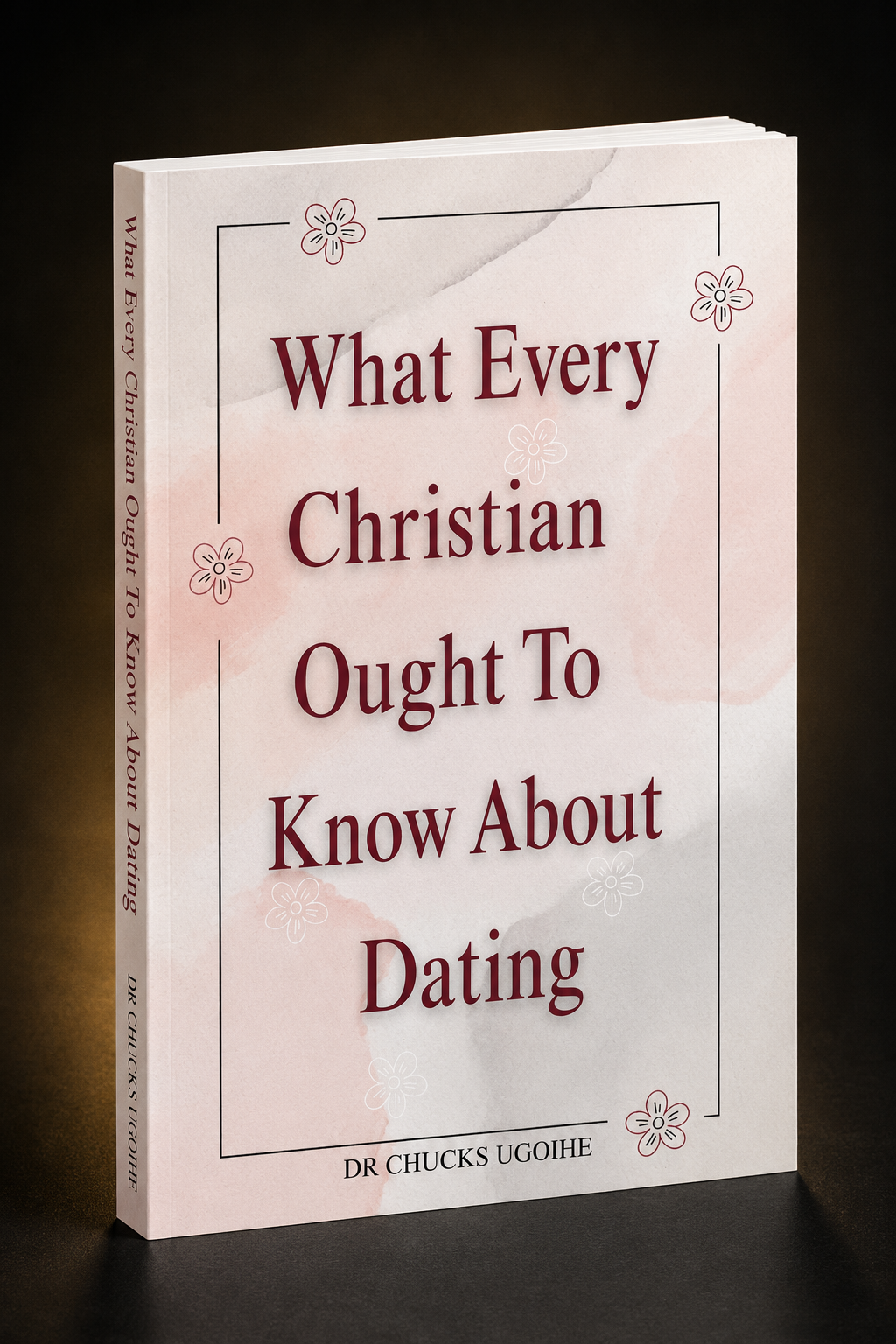
Bonus 1: What Every Christian Ought To Know About Dating
A concise companion guide that helps you notice character, curiosity, emotional availability, spiritual alignment and intention during the early stages, without turning dates into interrogations.

Bonus 2: Is This True Love?
Discover the difference between infatuation, lust and true love. A clear, honest guide for dating, courting and choosing wisely.
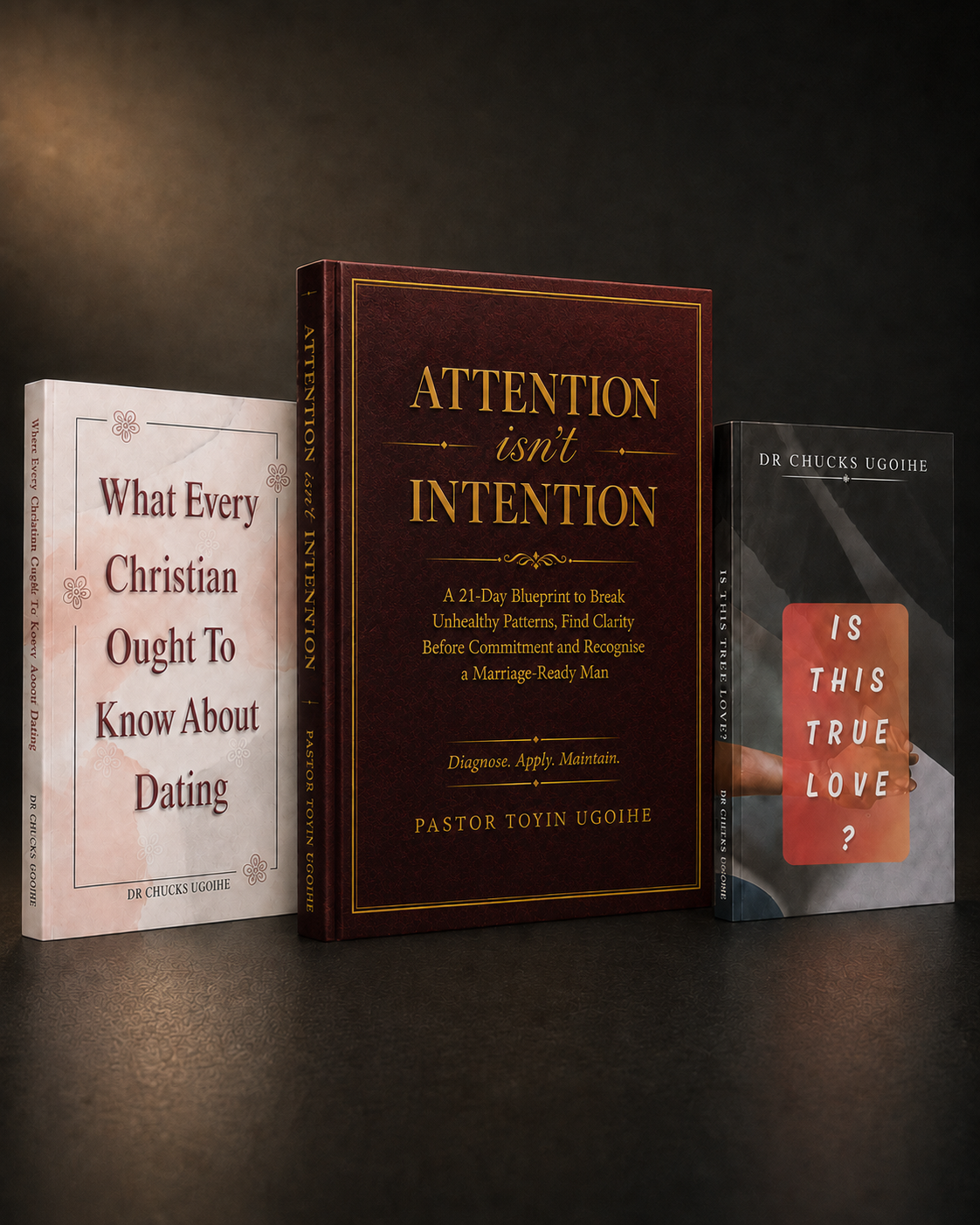
The Complete Attention Isn't Intention Bundle Your Price Today: R199
Begin Your 21-Day Reset Today
The sooner you begin, the sooner you can start identifying your patterns, clarifying your standards and dating with greater wisdom and direction.
Still Feeling Unsure? I Totally Understand.
This is not a promise that a PDF will make someone marry you.
It is an invitation to work through a practical, prayerful process for greater self-awareness, biblical discernment, courageous conversations and wiser relationship decisions.
Your purchase is protected by our 14-Day Fair-Description Promise.
Read the introduction, complete the Baseline Relationship Assessment and begin working through the guide.
If, within 14 days of purchase, you believe that the resource is materially different from what was described on this page, contact [email protected] with your order details and a brief explanation.
Your request will be reviewed according to the published refund terms.
If the file is defective, incomplete or inaccessible after reasonable support, it will be replaced or an appropriate refund issued.
This promise does not guarantee: a proposal; marriage; reconciliation; another person’s commitment; a particular relationship outcome.
You Have Two Choices From Here
Option 1: Get Attention Isn't Intention and give yourself 21 guided days to understand the patterns shaping your relationships, clarify what you genuinely need in a husband, evaluate present marriage readiness, develop stronger boundaries and begin dating with greater confidence and direction.
Option 2: Continue relying on hope, chemistry and other people’s opinions without developing a clear personal framework for evaluating relationships and making decisions.
This is not about blaming yourself for every delay or disappointment.
It is not about believing that marriage is a reward for completing a formula.
It is about participating in your future with greater truth, courage and wisdom.
You can stop calling confusion “patience.” You can stop mistaking attention for intention.
You can stop investing deeply in relationships that have not accepted the responsibility of direction.
You can become clearer without becoming colder.
You can become wiser without becoming suspicious.
You can stop mistaking attention for intention.
You can honour your desire for marriage without allowing that desire to control you.
ATTENTION ISN'T INTENTION Compact 21-Day Edition plus Two Companion Bonuses R199